Monday, 10 March 2008

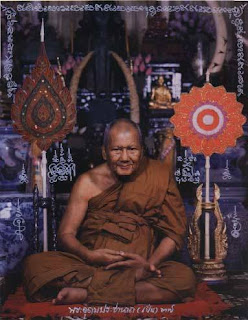
龍婆術 ( Luang Phor Sodh)


LP SOD" was knowed as " The Master of Tham-ma-kay Approach " , The Venerable "LP SOD" or his monk name "Phra Mongkol-Thepmuni" is fondly known and revere of Wat Paknam temple"LP SOD" was born October 10, 1884 at Supanburi Province, After his ordination, "LP SOD" began meditation practice and study of magic from Old scriptures. In search of deeper and wider knowledge, he moved to Bangkok. There, he frequented the centers of meditation practice and Pali magic study. Soon, "LP SOD" was recognized by his teachers as an accomplished meditation instructor. After ten years,"LP SOD" set aside his informal study of Pali Scriptures, having reached sufficiency to read the Maha Satipatthana Sutta. Thereafter he devoted himself totally to meditation practice. Now his magic or called " Tham-ma-kay Approach" is the revelation of the Dhamma as attained by "LP SOD", was the heart of his teaching.His decease at the age of seventy-five, on February 3,1959 was just a pause for the immortal master. His life should serve to remind other mortals to pursue their own obligations to the Noble Path carefully. monk teachings live on, manifesting the Ultimate Righteous Truth.

泰國古今有很多聲名顯赫的高僧,祂們都受人們尊敬,而其中有一位精進追求佛理、尋求解脫之道的得道高僧,便是有龍婆屈白南之稱的龍婆術大師。(以下簡稱大師)

大師在佛曆2427年(即西曆1884年),生於泰國術噴布里符,大師父親名拉銀,母親名術制,家中經營米糧生意

大師住所對面是一座佛寺,名叫屈爽鐵良,大師小時便在這佛寺由僧人教導知識,各僧人都說大師非常聰明,僧人所教的大師都很快領悟,後來便轉到屈班巴佛寺學習,大師14歲那年,因父親去世,便回家中幫助管理家業。

在大師19歲的一年,大師的佛性再也按不住了,一天大師突然有一念頭,"人為什麼要不斷辛苦工作? 為生活? 但已找夠生活的金錢,但同樣會不斷工作,不斷為金錢而工作,為什麼? 人始終會有一天會死亡,死後什麼也沒有,就好像我父親一樣,死後什麼也沒有,我自身亦有一天會死亡,死後也是什麼也沒有,那為什麼我會在這裡不斷工作? 人又為什麼會來到這個世界? 來到這個世界就是為了不斷辛苦工作?",想到這裡,大師已決定要效法佛陀尋求真理之道,但大師覺得人是每一天都有機會死亡,便向佛上香求願,希望在死前能有機會接觸真理之道、出家尋求佛法,如能有機會出家定必永不還俗,直至死亡。


在佛曆2449年(即西曆1906年),大師就在家鄉的屈爽鐵良佛寺出家,由屈筆讀散佛寺的龍婆尼大師,主持出家法事,往後大師便在屈爽鐵良佛寺修行,學習佛理,歷時一年,便到曼谷佛寺深造。

大師在曼谷的屈匹斜讀官佛寺寄居,但大師不只在一所佛寺學習,而是五所佛寺,大師每天早飯後到屈額輪佛寺學習,學習後便回屈匹斜讀官佛寺午飯,午飯後便到屈麥哈撻佛寺學習,黃昏再到兩所佛寺學習,分別為屈術撻佛寺及屈三搬佛寺,之後便回屈匹斜讀官佛寺再行學習。


深造完畢後,大師便在屈匹斜讀官佛寺教導佛理,但後來大師要到處宏揚佛法,便離開屈匹斜讀官佛寺,大師一路宏揚佛法,途經一所破舊佛寺屈拍史麥哈撻佛寺,便停留下來,為佛寺修保破爛的佛寺及佛像,更教導善信坐禪及佛理,而來學習的善信亦越來越多,但這時候當地的鎮長,不滿當地的居民都信奉大師,覺得影響當地佛寺的面子,所以便查探大師來歷,後來得知大師來自曼谷的屈匹斜讀官佛寺,便到向屈匹斜讀官佛寺住持拍括印熱甩大師投訴,拍括印熱甩大師便請大師離開當地,大師得知後,便離開當地,繼續宏揚佛法,後來回到家鄉屈爽鐵良佛寺,在佛寺興建學校,教導知識,更開辦佛學班教導佛理。

一段時間後,大師又離開佛寺,繼續宏揚佛法,所到之處都有很多善信向大師學習,信奉大師尊敬大師,但有些地方的人同樣因面子問題,不歡迎大師,但大師還是繼續到處宏揚佛法,後來曼谷的屈匹斜讀官佛寺住持拍括印熱甩大師,榮升為曼谷內一鎮的最高級僧人,而鎮內剛好有一佛寺,被泰國政府承認,但佛寺還未有住持,拍括印熱甩大師見大師精進宏揚佛法,便邀請大師到這佛寺擔任住持,而這佛寺名字就是屈白覽佛寺,龍婆術大師便在佛曆2459年(西曆1916年),擔任屈白覽佛寺住持,及後更有龍婆屈白覽之稱。

大師到屈白覽佛寺上任後,便立即開辦禪定班、佛學班,還有開設學堂,但在屈白覽佛寺原來的僧人,都不喜歡大師這樣做,都叫相識的善信不要參加,因此初期沒有太多人參加,禪定班和佛學班,大都只有大師以往的弟子,遠道而來參與,學堂亦只有三名學生,但大師沒有氣餒而停辦,只有更加努力。

在大師努力期間,有一天晚上,竟有人暗殺大師向大師開熗,子彈射中大師,但奇蹟出現,在大師所穿的袈裟的確有兩個子彈孔,但大師並未有任何受傷,子彈亦不知所蹤,很多善信知道這事後,都責責稱奇,更稱大師是聖僧,而且更分分參加大師的禪定班、佛學班,而且學堂亦激增多名學生,由最初的三名激增至三百名

而有一次,一名善信不相信大師,竟到來試大師神通力,"問大師今天會有人到大捐款建禪舍嗎",大師聽後,閉眼三分鐘,便答道,有,今天會有一人到來捐款建兩至三間禪舍,那善信覺大師答得像是不肯定說兩至三間,便向大師一笑,說今天會在佛寺等待,看看是否真的有人到來捐款,而在兩小時後,有一人到來佛寺,求見大師,向大師說看捐款建禪舍,預算建兩至三間,就在這次後善信們便流傳大師有先知能力,更加尊敬大師。及後大師的名字,在泰國無人不知,而在海外亦很多人尊崇,因此有些外國人都來到屈白覽佛寺出家為僧,向大師學習佛理、禪定。禪定班、佛學班及學堂,學生不斷增加,因此必定要佛寺及學堂擴建,所以大師在佛歷2493年西歷1950年製造了第一批有崇笛白覽之稱的拍礦官佛牌,以作送給捐款人之禮品。

及後大師所辦的學堂,亦成為一所學校,後來更由泰國政府接手發展,將之遷至別的地方,現在已變成一所有規模的學舍,而大師便在佛寺中專注教授禪定、佛理,直至佛曆2502年西曆1959年75歲圓寂,但大師的遺體竟變作不壞之身,現在還安放在佛寺中供奉。

大師所製的佛牌,至今以有很多靈驗事蹟,例如發生車禍但人沒有受傷,遇上賊熗殺但奇蹟人沒有受傷......等等,很多很多,而大師所製最為出名的佛牌,便是因籌款而開始製造的拍礦官佛牌,善信都稱為崇笛白覽。

Luang Phor Klai ( Phor Than Klai)


LP Kai 就是因為經常開口中,所以人稱"金口和尚".只有一隻腳.是其中一位泰皇敬重的老師父.師父身邊發生的神奇事都有很多..而師父的金身,死後經幾次火化都燒不掉.最後一次要泰皇親自點火才只可以成功火化到一隻腳指頭.金身還在寺內供善信參拜.師父身邊的奇事很多.其中一件比較有趣的是:有一次,泰皇問LP. 為何你每講的事,都會應驗.那LP叫泰皇寫下一組號碼.寫好後.放在一容器上. 現在你叫人看守好.明天才開來給大家看.到第2天,大家把字條拿來看,竟然就是當天彩票開彩的號碼.


早在60年前左右.師父經已有做Jatukam牌.當時幫助他一起做的有他其下的兩位弟子.都是白衣. 其中一位就是你們經常提起的archan Kunpan. 當年的jatukam牌.比現在的size還要大幾倍. 而現在他做的那些牌的價錢是天文數字了.絕不是現在這時期的JTK可以比美.而LP親手做的佛牌都是有著很高收藏價值的.LP Kai,是一位名氣和德行都成正比的師父.絕對是一位值的大家去尊敬的老師.

Luang Phor Waen


出生於佛曆2430年,大師資質聰敏,到2439年已正式出家為僧侶,跟隨亞贊呅大師學習佛理和佛法,而他對佛理佛法之深厚認識,亦形成人民對他非常敬拜,而大師住持的佛寺位於清澫,所出佛牌亦得到當地人民敬仰,大師已於佛曆2528年圓寂,享年98歲.

“What is sacred? Everyone has something sacred within themselves. To have been born as a complete human being is already sacred. One can be sacred only from within oneself, and not by any amulet or other so-called sacred objects.


Dhamma is sacred, and to have this sacredness, one must have Dhamma within oneself.” As a very popular monk, Luang Poo Waen Sujinno was often believed to have 'sacred amulets', something which Thais from all walks of life like to receive from respectable monks, for their protective value. People from all over Thailand would often travel to Wat Doi Mae Pang to seek these amulets or other sacred objects from Luang Poo and he would always give the same answer as the one quoted above. Luang Poo Waen Sujinno was born on the 16th of February 1883 in Tambon Na Pong, Muang District of Loei to a blacksmith's family. He was named Yarn and had one elder sister. He ordained as a novice monk in 1892 at Wat Bodhi Chai in Na Pong at the age of nine to fulfill the wish of his mother, when she died, while he was five years old. He studied with a number of teachers and later ordained as a monk at a temple in Hua Taparn District of Ubon Ratchathani at the age of 21.


Among the many teachers he studied with was Ajahn Mun Bhuridhatta Maha Thera in Udon Thani, who taught him the virtues of the pursuance of a secluded life and the practice of meditation and Dhamma in the jungles. Subsequently, Luang Poo travelled widely in the Northeast of Thailand in search of isolated places where he could meditate. His travels also took him to Bangkok where he met Chao Khun Phra Upali Gunupamacariya of Wat Bovoranives in 1921 with whom Luang Poo Waen spent several years studying and practising the Dhamma.


Later, Chao Khun Phra Upali took him to Wat Chedi Luang in Chiang Mai where Luang Poo Waen decided to make a switch from the Maha Nikaya sect of Thai Theravada Buddhism to the stricter Dhammayutika Nikaya sect. Luang Poo Waen travelled extensively by foot through thick jungles and remote mountains and even ventured to Myanmar and India where he paid homage at several historic sacred Buddhist sites. In the year of 1955, news of a foot injury sustained during his stay in seclusion at Wat Paa Ban Pong in Mae Taeng District, Chiang Mai, reached Phra Ajahn Noo Suchitto of Wat Doi Mae Pang, who later arranged for Luang Poo Waen to stay in Wat Doi Mae Pang permanently. Wat Doi Mae Pang then became the residence of Luang Poo Waen until his passing away in 1985.


Even then, Luang Poo did not reside in the monastery itself, but in a secluded hut a short distance away from the actual monastery. Luang Poo Waen began consecrating amulets and sacred images for people after settling down in Wat Doi Mae Pang. Luang Poo's amulets and sacred images were all consecrated for meritorious purposes, like raising funds for charitable organisations and hospitals. Many of his pendants were also specially created and distributed to armed forces personnel for their protection. Many devotees also started having miraculous experiences with him and his amulets then, the most famous one, which was also mentioned in the Asia Magazine, being the incident of him being spotted floating in the sky by an airforce pilot.


Please read the full magazine article from the Asia Magazine via the link below: Luang Poo Waen Sujinno was also widely rumoured to possess the mystical power to float in the air, to cure illness and to energize amulets that protected the wearer from bullets and knives. General Kriangsak Chamanand, supreme commander of the armed forces, in 1979 gave Thai soldiers amulets of Luang Poo Waen to protect them against what he described as Thailand's greatest enemy at that time, the Communist Party.


The King in 1978 sponsored a medallion with the images of Luang Poo Waen Sujinno and the royal crown which was sold to pay for the construction of several hospitals. The popular amulets were distributed through large banks and businesses and raised millions of baht. On the 15th of April 1985, Luang Poo Waen was found to be unable to eat or move and was admitted into the Maharaj Hospital. He was operated on 4th of June 1985 in order to insert a tube into his stomach through which he would be fed. However, various complications developed and Phra Ajaan Noo, the abbot of Wat Doi Mae Pang, requested doctors not to perform any more operations as he wanted Luang Poo to rest peacefully.


His request was granted by doctors and the Governor of Chiang Mai, Mr. Chaiya Punsiriwong. On the 2nd of July 1985 at 9.54pm, Luang Poo Waen finally passed away after having been in the monkhood for almost 90 years. He was given a royally-sponsored bathing ceremony at Sala Ang Klaew in Chiang Mai University which was attended by the King and Queen of Thailand as well as the general public. The staff of the Maharaj Hospital in Chiang Mai observed three minutes of silence as a mark of respect for Luang Poo in a memorial service.


Plenty of pictures were taken by reporters for news reports. Many people were amazed when the pictures were developed, as what seemed like images of Luang Poo had appeared miraculously on many of the pictures taken on that day. Luang Poo's sacred remains were kept in Wat Doi Mae Pang for about year for devotees to pay their last respects.


The remains were cremated at a Royal Funeral on 16 January 1986. The cremation was attended by the King and Queen of Thailand, the Prime Minister and half a million devotees. Just as the sacred fire was consuming the remains of Luang Poo amidst the chanting of monks and devotees, the image of Luang Poo Waen miraculously manifested within the flames upon the funeral pyre. This incident was witnessed my many devotees and was well-documented in many magazines and books about Luang Poo.


Subsequently, the remains of Luang Poo transformed into smooth grains like sand and glass shortly after the cremation, leading many people to strongly believe that Luang Poo had attained the state of an Arahant. However, despite much attention given to the miracles related to Luang Poo, there is no doubt that what Luang Poo would have wanted us to remember about him would be his legacy of pure Dhamma practice.


Tuesday, 4 March 2008

Luang Phor Sawai


Luang Phor Sawai was Borned on 18th January BE2464 at Bahn Rahchakahm , Ampher (Districy) Bahng Thai , Jangwat ( Province ) Prnakonsee Ayuttaya.

Monday, 3 March 2008

Luang Phor Kalong Kiew Kaew


Luang Phor Kalong is recognised as one of Thailand's true Guru monks,practised in the arts of meditation, telepathy and magical incantations.He was born on a Saturday in the second lunar month of 1919 at Klong 7, Pathumthani Province. His mother was from Supanburi Province– she was Luang Phor Niam's younger sister, making Luang Phor Kalong the nephew of Luang Phor Niam of Wat Noi Temple, who incidentally was a senior master of Supanburi Province.Before his birth, Bang, an old man living opposite was fishing in the night. He saw a Reusi holding a young child's hand who walked into the house.


When the Reverend Father Kalong grew older, he became very interested instudying magical incantations. He entered priesthood when he was 20 years old at Nabun Temple (Wat Nabun) Klong 7 District, Pathumthani Province. The Reverend Father Niam officiated in his ordination


Afterthat, the Luang Phor Kalong studied meditation and magical incantations from many senior masters, for example, Luang Phor Niam of Nabun Temple, Klong 7 in Pathumthani Province, Luang Phor Chang of Kien Kate Templein Pathumthani Province, Luang Phor Auad of Klang Temple, Klong 4 in Pathumthani, Luang Phor Chaem of Takong Temple in Nakhornpathom, LuangPhor of Natangnok Temple in Ayudhaya, Luang Phor Thongsook ofTanoadluang in Petchaburi, Luang Phor Jan of Nangnoo Temple in Lopburi,the Lord Abbot Indrasamacharn (Ngern) of Indrawiharn Temple,Bangkhunprom, Bangkok and Luang Phor Somchai of Khao Sukim Temple inChantaburi.


He practiced the same way as Luang Phor Sook of Pakklong Makhamthao Templein Chainat. In fact he became the Reverend Father Sook's disciple at the same time as Khun Klaklangpachon, a close subordinate of His Royal Chumporn. Regarding Suthatthepwararam Temple, the Reverend Father Kalong followed Luang Phor Niam of Nabun .


Temple to attend a sacred ceremony to celebrate the Buddha image "phrabuddhachinnarat Indo-China"at Wat Suthat in 1942. It was there that he had a chance to meet the Patriarch Pae of Suthat Temple.Afterwards,he studied the art of smelting metals and how to to smelt new metals.He also studied the scriptures and the sacred art of creating the PhraKring amulet from the Lord Mongkonmuni (Sonthi). He studied with theReverend Father Chamlong (passed away in 1997)


Luang Phor Kalong was the best disciple and a confidant of the Lord Wisuthacharn or the Lord Pae, (passed away in 2001) who was the direct disciple of the Patriarch Pae


The Reverend Pae had said that he studied meditation and perceived manythings from many masters while meditating, for example, the hermit Poochaosamingprai (the one who led him down to earth), Maha BrahmaChinapanchara, and other masters who have passed away.


Thereare also many masters who have co-operated with Luang Phor Kalong –some are still living, whilst other have now passed away. An interesting story is that of Luang Phor Toh of Pradoochimplee Temple with whom he meditated with on many occasions. They originally met at Wat Indrawiharn, Bangkhunbrom.


LuangPhor Toh had pointed at Luang Phor Kalong while asking Luang Phor Chaem of Nuannoradit Temple who this monk was, and from where he came. He had said that he had never met a monk with such strong powers of telepathy.


Luang Phor Pern


Luang Phor Pern Tithakunoe was Born in Thambon Bang Gaew Nakhon Pathom on the 12th of August 2466.


Shortly after his Birth, his mother and father decided to move to live in the small Village of Baan Tung Kork, in The district of Sorng Pi Norng province of SupannBurii.


Supan Burii was a territory that teemed with "Nak Laeng and infamous highwaymen including well known characters such as, Suea Dam, Suea Bai, and Suea Mahaesworn. (Interestingly it is now these very type of modern day characters that seek the protection from LP Pern)At this time, Luang Phor Pern who was still a Layman, found it wise to source some magic charms to protect himself from the dangerous elements of the region.


In addition to this, Luang Phor Pern had always been attracted to Buddhist Magic used by warriors in the historic past. Suffice to say he was seriously interested in all things paranormal.


He sought out one of the most respected monk of his time, Luang Phor Daeng (Pra Kruu Suwannasaatugith).


Luang Phor Daeng was based in the area at Wat Tung Kork, in Supannburii Province. Luang Phor Pern became a Lay Disciple of Luang Phor Daeng, who was in turn a disciple of Luang Phor Hnoeng (Wat Klong Madan); an Expert in matters of Sorcery.


At the age of 26 Luang Phor Pern would become ordained as a Monk. He was ordained by Phra Ajahn Huem, who was also his teacher in Buddha Magic and Sorcery.


Apart from that, Luang Phor Pern was a Disciple of "Agkara Khorm" , and a student of yant composition and application. His yant were renowned for their aesthetic beauty and the power that they carried. Luang Phor Pern studied vipassana meditation with utmost dedication for many years and through these studies was able to become a disciple of the Great Luang Phor Opassi, one of the Greatest monks of the time, known for his powers of white magic.


After this, Luang Phor Pern went "Tudong" in the jungles of Western Thailand (Kanchanaburi) He crossed the border into the realm of Marit (Burma), through the remote areas of Saesawoe and Bang Graenggawia; Known in that time as being the thickest darkest Jungle, full of dangerous animals and unknown fevers.


According to Thai beliefs, there was also the added dangers of "Naang Mai" (wicked fairies and tree spirits), Phii Phoeng and Phii Phaa (Jungle ghosts) and all sorts of evil spirits. The inhabitants of this thickly forested and mountainous region were mostly Karen, many of whom became disciples of Luang Phor Pern.


Luang Phor Pern seemed to be loved and respected wherever he travelled, due to the fact that he possessed such a transparent personality that allowed all to see his great compassion and his power to help folk with his magic.


One day Luang Phor Pern was called upon by the local folk to become Abbot of Wat Tung Nang Lork (Temple of the field with the lady ghost), in Kanchanaburi, where he developed the temple during his five year stay. After this he returned to the jungles to practice the ancient ascetic meditation practices.


Luang Phor Pern later became the Abbott of Wat Koeg Khaemao in Nakorn Pathom, which at that time was not only in a bad state of repair but was also in an area that was inaccessible, being thickly forested. He developed and repaired the temple gaining the love and respect of the local people. It was here that he consecrated his very first amulets, which are now rare and hard to find. It was from the donations received in return for these amulets that he was able to renovate the temple.


After many years at Wat Koeg Khaemao he was invited to become Abbot of Wat Bang Phra where he became better known for spiritual tattoos or yant especially the tattoo festival in the month of March.


All Luang Phor Pern’s amulets are well-know for warding off dangers of all kinds. All recorded and unrecorded miraculous phenomena can be heard from people that wore Luang Phor Pern’s amulets. However, many do not know that, his amulets are also imbuing with the power for invulnerability, Maha Phokhasap (great wealth), Mahalarp (great fortune), Klaew Klaad (free from all harms),Maha Amnaj (great charismatic power feared by others) and Maha Metta (to be greatly loved by others all around).


Many people who had worn Luang Phor Pern’s amulets encountered efficacious experiences with Great Metta, Fortune, Unexpected Bonanza, and Life Protection. The news of experiences was widely spreading to BKK and many other provinces which ignited a scrambling sourcing of amulets consecrated by him.


Luang Phor Pern of Wat Bang Phra was a benevolent donor that built hospital for the poor villagers and likewise schools to educate them with a skill to earn a living. His great compassionate was widely known by many others in Thailand. In addition, he was greatly known by many for his occult Thai tattoo. His “ser” (tiger) tattoo was said that to possess the power to stop a bullet.


In the month of March, many devotees will travel about an hour's drive west of Bangkok. Thousands of roughnecks - laborers, drivers, mobsters - descend upon the temple to honor Luang Phor Pern, in a ceremony known as wai kroo, or bow to the teacher. On this occasion, devotees receive new tattoos, revitalize old ones and a blessing ceremony was also given in the form of prayers that was said to rejuvenate those with luck of wealth and fortune. It is also greatly believe by his devotees that Luang Phor Pern’s tattoos can stop bullets and blades, prevent road accidents, improve business, induce trances, and calm your mind.


Apart from his popularity in tattooing, he was also a guru that produces amulets with the attributes of invulnerability, Maha Phokhasap (great wealth), Mahalarp (great fortune), Klaew Klaad (free from all harms), Maha Amnaj (great charismatic power feared by others) and Maha Metta (to be greatly loved by others all around). LP Pern was also considered as one of the greatest guru in Palad Khik creation in the present days.


The tiger is an emblem of prosperity, courage, confidence, fearless and Maha Amnaj in Luang Phor Pern’s amulets. These make us link the tiger tooth (Khiao Ser) of Luang Phor Pang, Wat Bangnomkho, Authaya to them. However, Luang Pern did consecrate a small quantity of Khiao Ser with his special Katha etched on it. Khiao Ser in Thai language is translated as Khiao for tooth and Ser for tiger. Therefore, Khiao Ser means tiger tooth.


In the terminology of Thai amulets, Khiao Ser is a figure of tiger regardless of what it is been made of. Normally, the materials for making Khiao Ser are tiger’s tooth, bear’s tooth, ivory, wood and even bronze or metal. The most expensive will be those make of tiger tooth mainly due to the difficulty in obtaining one with the diminishing number of tigers in the World. Likewise, every tiger have only one pair of upper front big teeth. This economic reason causes the price for the rarity pair of upper front big teeth to be extremely high. Moreover after the consecration, this piece of tooth becomes very rare. It is most suitable for people that need to command respect from others. Hence, help the wearer to avoid becoming a victim of political struggle in any arena. The above Khiao Ser is approximately 11.5 x 3.5 cm consecrated by Luang Phor Pern in 2530s.


All Luang Phor Pern’s amulets are well-know for warding off dangers of all kinds. All recorded and unrecorded miraculous phenomena can be heard from people that wore Luang Phor Pern’s amulets. However, many do not know that, his amulets are also imbuing with the power for invulnerability, Maha Phokhasap (great wealth), Mahalarp (great fortune), Klaew Klaad (free from all harms) and Maha Amnaj (great charismatic power feared by others) and Maha Metta (to be greatly loved by others all around).

To enhance the efficacious result of the amulets, one need to do is simply said “Luang Phor Pern (x 3 times)” and informs him of the current needs by the wearer. In addition, synchronize with your right hand touching the amulet. Although, Luang Phor Pern had passed away in the year 2002 (30th June), your wish can still be answered by him. This is an evidence of one attainting Arahan


Luang Phor Toh


Luang Pu Toh,Wat Pradoochimpee passed away on 5th April BE2524 at the age of 93 years old.


Pra Raht SangWaLahPiMon or Luang Poo Toh ITatSuWanNon was born on 27th March BE2430 at Bahn Klorng Nahng Noi, Jangwat SaMutSongKrahm (near Bangkok).

Luang Poo Toh became a novice since he was young at Wat PraDooChimPlee. At that time, Pra ATitGahnKum was the abbot of Wat PraDooChimPlee. Luang Poo Toh studied dhamma under Pra Ah Jahn Prom from Wat PraDooChimPlee. When Luang Poo Toh was 20 years of age, he was ordained as a monk on 16th July BE2450 by PraKru SamMaNaTamSaMahTahn (Saeng) from Wat PakNam. PraKru ArGatRahNuSit (Porng) Wat NuaNooRaDit and PraKru TamMaWiRat (Chei) Wat GumPaeng were the receptors. After Pra Ah Jahn Prom passed away, Luang Poo Toh went to study dhamma under Luang Por Rong Wat TahGraBeua at SaMuSahKon Province. Sometime later, he went Tudong to many forested places in Northern Thailand, spending many rain retreats there.


Luang Poo Toh returned to Bangkok and became the abbot of Wat PraDooChimPlee. He got to know Luang Por Sod, Wat PakNam and they became close friends. Some time later, Luang Por Sod accompanied Luang Poo Toh to learn under the very famous Pra Ah Jahn Nohng at SuPhanBuri Province. After studying under Ah Jahn Nohng for many years, Luang Poo Toh returned to Bangkok


Luang Poo Toh was very popular and highly respected in Bangkok. Whenever there were any ceremony such chanting of amulets, celebration, fund raising etc, Luang Poo Toh would always be invited, because when people heard about Luang Poo Toh's name, they would come to support the ceremony as well.


As such, Luang Poo Toh was involved in many mass chanting of amulets such as Pra Somdej Luang Phor Pae Roon Rahk chanting at Wat Suthat in BE2494, 25 Puttawat chanting in BE2500, Pra Luang Poo Thuat chanting at Wat Prasat in BE2506B, Pra Somdej 09 chanting at Wat Bahn Koon Prom in BE2509, Pra Somdej Roy Pee chanting at Wat Rakang in BE2515 etc


Beside the lay people, the 9th or the present King of Thailand and the royal family respected Luang Poo Toh very much too. One can see from many photographs of the royal family had taken with Luang Poo Toh.


In BE2463, Luang Poo chanted the first batch of amulets made of Neua Phong. The most popular Pim from this batch is the Pra Somdej KaToh , which is very rare and expensive now. Since that time, Luang Poo Toh continue to chant many batches of amulets of many types, such as Pra Pidta, Somdej, Roop Meuan and Rians etc. All Luang Poo Toh's amulets are very well-proven to be able to protect people from accidents and hardship.

Luang Phor Kasem


Luang Phor Kasem Kemagoh passed away in BE2538 at the age of 83.

Luang Phor Kasem was born on Wednesday, 28th November BE2455 in Jangwat Lampang. Luang Phor Kasem was the descendants of Lampang's King from Lanna Period.

He became a novice monk in BE2468 after the dead his uncle, the abbot of Wat Bunyeun. In BE2470, he went to Bangkok, Wat Setuwan to study Pali language. He returned to Lampang and further his Pali studies in Wat Seelom and Wat Bunyawaht.

In BE2475, he passed his Pali examination with good results and came in first in class at Wat Setuwan. In BE2476, he was ordained as a monk at Wat Bunyeun at the age of 21 years old. His preceptor was Tahn Jow Koon Tammajindah. His ordained name's was Kemagoh Pikkhu.
After he entered monkhood, Luang Por Kasem went to Jangwat Chiangrai to further his Pali studies. He met Luang Phor Krubah Gaen, a very famous monk in North Thailand who was a Tudong monk (forest monk), very good in sammahdti. Luang Phor Kasem became a disciple of Pra Krubah Gaen and went Tudong with his teacher in forests and cementries.

After he entered monkhood, Luang Phor Kasem went to Jangwat Chiangrai to further his Pali studies. He met Luang Phor Krubah Gaen, a very famous monk in North Thailand who was a Tudong monk (forest monk), very good in sammahdti. Luang Phor Kasem became a disciple of Pra Krubah Gaen and went Tudong with his teacher in forests and cementries.

When the abbot of Wat Bunyeun passed away, Pra Dtomkum became the new abbot. After some time, Pra Dtomkum left the temple and the post of abbot at Wat Bunyeun because of boredom. The villagers invited Luang Por Kasem to return to Lampang to be the new abbot of Wat Bunyeun.

Luang Phor Kasem continue his learning in dhamma and sammahdti practise even when he was the abbot. The more he trained, the more realised that life is uncertain. His duties as the abbot, kept him rather busy and finally in BE2492, he left Wat Bunyeun, and went to stay at Sasahn Sahlahwangthan (a cementry at another place in Lampang). Luang Phor Kasem was determined to practise the highest sammahdti at the cementry. He would sit in front of the burial place and watch the burning of corpse. Whether in hot sun or raining, Luang Phor would just sit quietly and watched the corpse being burned to ashes.

Luang Phor Kasem ever sat in sammahdti for as long as 3 months, without shelter under hot sun or heavy rain. Even his robes were wet by the rain or during cold season, when the cold wind blows, Luang Phor Kasem would just sit quietly and not complain and asked for anything. He had let go of everything and steadfast in his practise of dhamma and sammahdti. He ever go without food for 49 days

Since BE2514, Luang Phor Kasem only bathed once a year, but there is no stench or foul odour from his body, even his sweat was pouring under the hot sun. More surprisingly, without shelter and mosquito net, Luang Phor Kasem never suffered a bite from mosquito at the cementry.

Luang Phor Kasem carried nothing with him. His only possession was an alm bowl, his robe which he was wearing and a piece of human bone for him to practise sammahdti. He did not even have any footwear.

Luang Phor Kasem ever mentioned that he is a forest monk and does not required any possession. He was contented with a piece of robe covering his body. Whatever things that the layman gave to him, Luang Phor Kasem would give away to other monks.

Luang Phor Kasem never used a pillow to sleep, because to him, a pillow is a luxury. Luang Phor Kasem would sleep with his body in full protrate position and would sleep at the same spot where he sat in sammahdti

He was very determined to find the truth of life. He asked for nothing in life though he can enjoy the luxuries in life as he was the descendants of royal blood in Lampang.

Chao Khun Nor


Chao Koon Nor-ra-rath Choa Kon Norn was born on 5th February AD 1897. He got the certificate in Public Administration and practiced as a messenger for pseudomilitary organization.
This practice was the turning point for him from the aim to work as government officer to become court official in the King Vachiravut. The King trusted in him very much and appointed him to become "Praya Norrarattana Ratchamanit" that means "the great person that the king admire". Being a royal official for ten years, he worked with his highest gratefulness, diligent, honor, and loyal. As once he used to say that he could "die for the King".
Finally, he ordained for the king's funeral. He was a priest until he passed away. As a priest, he was a very strict to the Dharma principle He was a pure person that rarely priest can be. Thai Buddhism adores him as 'The real priest' who was unambition, and great in gratitude.

Monday, 25 February 2008

Luang Phor Pae


Wat Phikulthong, Singburi - Luang Phor Pae


Luang Phor Pae has passed away on 10th Feb'99 (2542) in his age of 94.


Luang Por Pae was 11 years old, he studied Pali from Pra Ah Jahn Pan and Pra Ah Jahn Pom at Wat Pigoontorng. When he was 14 years old, he went to Bangkok to studied Pali under Pra Ah Jahn Som who was a Cambodian monk at Wat Chanasongkahm. Luang Por Pae at the age of 16 years, returned to Wat Piggontorng and became a novice monk, after which he went to Wat Chaanasongkahm to further his learning in advanced Pali until the age of 22 years old.


Luang Por Pae was ordained as a monk at the age of 22 years old at Wat Pigoontorng. Pra Mongkontipmunee (Bangkok) was he preceptor and Pra Kroo Sittidet was his Dhamma teacher. In year BE2474, he became the abbot of Wat Pigoontorng. He re-built Wat Pigoontorng from a old and ruined temple to now, a beautiful and well-known temple in Singburi as well as in Thailand.


Luang Por Pae created and chanted the first amulets in BE2482 to raise fund for re-building the temple. Luang Por See of Wat Praphrang helped Luang Por Pae to create the first batch of amulets; Pra Glee Bua and Waen Chaai Ying (Man Woman Ring).


From that time onwards, Luang Por Pae became well-known as a monk who was very good in making amulet until the present days. Luang Por Pae amulets are good and well proven, many experiences from people who wear his amulets claimed that his amulets give protection and metta to the wearers. His amulets are very popular in Thailand and also in overseas.


Luang Por Pae had chanted almost a hundreds batches of amulets. Some batches are expensive and difficult to find and some batches are of average price. Until now, Luang Por Pae amulets and statues, every batches and every moulds in the future would be hard to find because Luang Por Pae has already passed away and the price of his amulets would be high.

朝坤克隆 ( Luang Phor Kron _ Tok Raja)


Khron Ratchanaren (known as Tok Raja) was born on Thursday December 1, BE2419 (1876). He was sent to Wat Uttamaram by his parents when he was 12 years old to learn Buddhism and Thai language. He stayed with Archan Lok who was the temple Chief Abbot at that time.Tok had showed great interest in Buddhism and became a "Dek Jom" under the supervision of Bhikkhu (monks) in the temple. Besides, he also learned crafting and construction. He once told the devotees that even from an early age, he cherished the ambition of joining the monk hood and stay in the temple to learn Buddhism unlike his other kampung (village) boys of the same age who more preferred to stay in their homes in the kampung.Ordination (Upasombot)

Tok joined monk hood (Bhikkhu) on Jun 15, 2438 (1895) when he was 21 years old. The ordination took place at Wat Uttamaram and was ordained by the following monks:1) Phra Upatcha Palad Chai from Wat Mai Suwankhiri2) Phra Khru Ophart Phuthakhun from Wat Chon Prachumthart and3) Phra Athikarn Phut from Wat Bangtakwa Silaloi who became KammavacanusavanacarnTok was then given a Buddhist name known as Punnaksuwanno. After becoming a monk, Tok stayed at Wat Uttamatam for two phansa after that Tok traveled to Southern Thailand to learn Pali language and at that time is known as the big book. Tok was resided at Wat huaphom Nai in Songkhla and learn Buddhism in greater depth. He also learned "Phrakhatha vertmon" which consist of "Khamphi Mulkachai" and "Khamphi Thammadboth" in Wat Huaporm Nai as well as Vipassana Kammatharn technique in Songkhla for 15 years. In the year 2449 BE, Tok was appointed Chief Abbot of the Wat for 10 years. Due to the fact that Tok needs to be back to Malaya, he stepped down as Chief Abbot of Wat Huaporm Nai. Once back from Thailand, he became the Chief Abbot of Wat Mai Suwankhiri for 6 years before been transferred back to Wat Uttamaram and became the Chief Abbot of the Wat in year 2468 BE. He taught Vippassana meditation and ubasok ubasika Buddhaborisat to the kampung folks Buddhist fundamentals as well as Vertmon Katha to his pupils.Tok's role in the deployment of Dharma knowledge and spreading of Buddha's teachings When Tok came back from Songkhla Thailand, he stressed a lot on knowledge skill. He worked very hard in order to expand the knowledge skills to devotees in Kelantan but did not meet his expectation since the Society at that time did not realise the importance of education and as such, was unable to achieve his mission to the fullness. In early year of BE2491 (1948), Thai Buddhism has spread out of the country especially to the neighboring country like Malaya. Malaysia was formerly known as Malaya. In that year, the first Naktham school was established in the Kedah state of Malaya. Tok has waited for the opportunity to open up such school for long time and has establish the same Naktham school in the year BE2492 and the first school was established in Wat Uttamaram Bangsek itself. It was a resounding success in establishing these schools and Tok later handed over the management of the school to Phra Maha Chan Kesaro who possessed "Parian Tham 6 Prakyok" as a teacher master. Even though there was a shortage in teaching resources, there was a huge demand from monks all over Kelantan to study at Wat Uttamaram to seek knowledge and learn Naktham where the expenses incurred were manageable. It was not easy to go to Wat Uttamaram at that time where it took hours to reach by walking through the jungle. Such obstacles did not prevent these pupil monks from reaching the Wat and in the same year as it was established, the first Naktham examination was held at Wat Uttamaram in Kelantan.
I m just sharing my experience with the members of the forum and hope it will benefits everyone. Please beware that there are so many FAKE TRaja amulets in the market now

Chinese :-
「九五之尊」的氣派,未必便是堂皇炫目,而是來自那份就算沉積內歛,也讓人深深感受到的超凡脫俗;就像雄獅隨意躺、臥或坐,都那麼有力的展現王者風範!


在偏遠的吉蘭丹,歷代來皆出產過無數高僧及奇僧,他們這種「入地獄」式的存在,照耀了丹州這個被外人視為「蠻荒」之地,也因為他們努力不懈帶動,丹州建立了無數富有傳奇色彩的巍峨佛寺。
著如早期著名的臥佛寺及站佛寺(其實是行佛寺),及後期崛起的坐佛寺、雙龍寺及龍船寺,往往教首次膜拜的善信,對其龐然堂皇的建築咋舌不已,嘆為觀止!


但有言道,山不在高、水不在深,有仙則靈;原來威望駕臨丹州大小佛寺的,並非來自上述「五指佛寺」中任何一間,而是知名度遠遜的「僧王寺」!


僧王寺名氣不夠上述佛寺響亮,主要是該寺並沒被刻意發展成為著名的旅遊勝地,加上低調作風及長期來沒甚獲傳媒及當局關注,僧王寺對外州人而言,可說是「默默無聞」.


但這種說法,肯定不包括對本地佛寺有認識者及泰國的善信,對他們而言,僧王寺才擁有至高無上地位,以及威名赫赫代表性佛寺。


其中奠定該佛寺地位的便是一代神僧--朝坤克隆(CHAOKHUN KHRON)。朝坤意為眾僧之首,克隆是人名;大馬歷史上,首位獲得泰王賜封為一州僧首的神僧,他也是當時並非泰國本土和尚的泰國十大神僧之一!


賜封他的是拉瑪五世泰王,即續襲後來被拍攝成電影「國王與我」拉瑪四世泰王蒙谷的王位者;僧王寺之名就由他而起。


朝坤克隆後,續承其位的分別是朝坤張及朝坤密,他們也各別獲得泰王賜封,成為統領丹州境內眾佛寺及僧侶的僧王。


三代各富神奇色彩的僧王,已使得僧王寺奠定王者地位,牢不可動,也使善信心中,永遠緬懷僧王時代。


住持:法力非正信之道

冀注意佛法精微


在遠古荒蠻的時代,村人更在意的是神僧的法力,但實際上,神僧們雖都「身懷絕技」,甚至擁有通靈力量,但這始終並非我佛的正信之道。


因此,目前掌寺的年輕住持曇文,瞭解到時代進步,正是時候擺脫善信們對高僧必須擁有神奇力量要求,他以身作則,努力擺脫這種非份要求及期望。


他說,神怪力量始終不是佛法中所著重之處,儘管必然會有許多善信會對他沒懷神力而感失望,但他更希望,善信注意的是佛法精微。


本身受過高等教育,甚至曾經隻身遠赴斯里蘭卡修讀佛經,而且早前若非師父朝坤密要求,他早已到印度深造更高境界佛法。


曇文是本地泰裔;為人隨和,說得一口流利英語、國語及福建話,與他談天,往往可查覺到他那不經意流露出來的智慧及抱負,記者有感於如此人中之龍,何以淺擱 鄉野?針對記者所問,他直指在這裡並不快樂,他的理想仍舊是到印度修習佛法,但持著師父去世前的要求,他只好留下當僧王寺住持。


詢及在他之前的三代僧王都擁有深厚法力,他笑說,先修習佛法吧,等以後老了看看有沒有時間,也許會學一些。


其實,佛法並沒要求僧人必須修習蠱術或解降術,但鑒於早期的丹州及泰南,充滿蠱毒降害事件,因此德高望重的僧人往往出於慈悲之心,才會通過神力救人,但也無意顯露奇異力量,久而眾人推崇。


他指出,早期的僧侶因「市場需求」而必須修習天文地理、蠱術降頭及各類草藥的運用,這叫做「方便法」,只是藉此在醫藥設備落後,甚至於近乎零的村落裡行醫救人,吸引善信接受教化。


他說,目前醫學昌明,僧侶無需再扮演解降及土醫的角色,而他本身也樂得如此,集中精神修讀佛經及到處講解佛經,他曾到過台灣、香港及新加坡等地舉行佛法講座。


「我努力修習英文,不是為了要做『西方和尚』,而是要方便通過英文,與世界各地善信溝通及藉此讀取英文版佛經,目前我也通過電腦網絡來學習。」


逾十村落居民

分批建誡律院


王寺本身並沒號召眾佛寺的權力,卻因為三代僧王都住在該寺,加上目前主持也是位甚具威望的高學問僧侶,無形中使該寺有超然地位。


更多時候,僧王寺在丹州被當地人習慣叫作「僧王廟」,也許這比較順口,事實上泰式佛寺叫做樾(WAT),泰式W稱為 WAT UTTAMARAM,佔地約十英畝,範疇甚廣及建有多座建築,包括大雄寶殿、誡律院、主持院、僧侶院及骨灰塔等。


相信早在十九世紀前(丹州曾是泰屬地)的僧王寺原寺並非在現址,而是魯伯仲(LUBOK JONG),後來當時的僧首曇范喇阿巴查叔於一九二五年遷寺至目前村落甘榜克默昔(KG KEMESEK)。


在僧王制由泰王拉瑪五世開始前,統領眾僧侶者僅叫做僧首,後來才改用更完善的僧王制,僧王受泰王承認及賜封代表權威的扇子。


第一代僧王朝坤克隆是從一九二五年始擔任至一九六二年去世,他之前的紀錄大多不詳。


據知,該寺是由遠近十餘個村落(該區村民多達八十巴仙是泰裔)村民,分批輪流為該寺建上最有代表性的誡律院。


據知,該院是繪圖師遠到泰國曼谷根據泰皇某座建築設計而建,深具泰國傳統建築的精緻及典雅,並有龍、虎、象等吉祥物圍寺,以示護佑。


僧王職權如同州務大臣,處理及決定州內各佛寺諸類事件,包括擇日為高僧遺體火化。


僧王遺體留寺內


第二代僧王為朝坤張(CHAOKHUN CHAN)及第三代為朝坤密(CHAOKHUN MIT )。


朝坤密於五年前去世,遺體經過防腐留存在寺內供善信膜拜敬仰。


目前該寺住持是巴拉克魯文曇(PHRA KHRU BOON THAM),巴拉克魯是職位,低於僧王,文為人名,曇在泰文是和尚之意,簡叫曇文。


曇文也是丹州僧團理事會秘書及僧王秘書。他說,僧王的封賜來自兩方面,即丹州蘇丹封為「和尚首領」(ketua sami);而另一則來自泰王的封賜。


因此,僧王通常必須獲泰王及丹州蘇丹封賜後,才名正言順成為僧王,僧王是由僧團理事會所推薦。


現任僧王曇裕並沒住在僧王寺(他將於今年杪獲泰王封賜正式僧王號),而是在道北縣另一佛寺;但每當重大會議,仍習慣性選擇在僧王寺進行,偶爾才到其他佛寺進行

龍普彌猜 ( Luang Phor MeeChai)


Friday, 22 February 2008

亞贊多 ( Achan Toh^Somdej Toh)


Somdej Toh was born in Kamphaeng Phet Province, possibly the son of King Rama I. He studied the Buddhist scriptures of the Pāli Canon with several Buddhist masters. After becoming a well-known monk, he became the preceptor for Prince Mongkut, later King Rama IV, when Mongkut became a monk. During Rama IV's reign Somdej Toh was given the ceremonial name Phra Buddhacharn Toh Phomarangsi.
He was noted for the skill of his preaching and his use of Thai poetry to reflect the beauty of Buddhism, and for making amulets call Somdej. The amulets were blessed by himself and other respected monks in Thailand. He also appears in many versions of the story of Nang Nak.


在泰國是一位很出名的大師有皇族血統, 出生於佛
曆 1776年,自小由母親苦養,7歲便跟隨龍婆交大師學習佛理和佛法,悟性亦比常人高,所以年紀很小已受到很多人民敬拜,而由他朔造祟笛佛牌亦受到泰國人民歡迎和渴求,而大師和他所出的佛牌亦有很多神奇事跡發生,在當地亦盛傳很久.

颂笛(somdej)佛牌,可稱作牌中之王,大約佛曆2382年左右,由亞贊多大師所創做,據說一天亞贊多大師正在禪定,聽到其師父的聲音說:〝明天日出很特別,早起到海邊看日出吧!〞亞贊多大師便跑到海邊去,當時天還未亮,但東邊發出一道白光,慢慢變作一尊全身發著白色光的佛像,呈現在東邊的海面上,亞贊多大師高興至流下眼淚,這尊像太陽般的佛像,一定帶來幸福平安〞然後叩拜離開。這樣亞贊多大師便開始製作颂笛佛。而製作颂笛佛的材料,有廟宇的泥土、香灰、高僧剃下的頭髮、五穀及高僧舍利子做成,再請各大名寺高僧,為佛像做大法會誦經,十分真貴。颂笛佛能保人平安、辟邪、擋危險、助人緣、事事順利。據說佩帶 颂笛佛者,只要心存善心,必得事事順利,事事如意,受天神護法保佑。所以,至今大大小小?廟宇高僧,亦有製做颂笛佛給善信供請。但有些存心不良者有見及此,便自行大量製造來魚目混珠,欺騙無知信徒,所以善信定要份外留神。颂笛佛沒有面相。初時,法坐多為三層代表天地人三界、亦有五層、七層或九層,近六七十年更有十一層、十三層之多。在這一百幾年,颂笛佛的神跡多至數之不盡,例如曾經有人從高處失足跌下,但他佩帶了颂笛佛,身體沒有受傷。又例,有一個人駕駛汽車發生交通意外,汽車接近完全破爛,但人竟沒有受傷。諸如此類真的數之不盡。而論到颂笛佛的價值,在泰國曾經有報紙報導,有人用一輛平治房車來交換一個颂笛佛,亦有人用一間屋來交換。千真萬確!如果一個由亞贊多大師親手所做或已有百年的,真的價值幾十萬港元,但如果是近十幾年所做,只是價值數千至幾百不等.

在眾多泰國佛牌中,颂笛佛牌最為善信為愛戴,更有佛中之王之稱,而創造佛牌的高僧,便是亞贊多大師.

亞贊多大師,本身實為泰國皇族血統,有說乃泰國第一世皇於西曆1776年,當時還未成為泰皇時與一名作煥的女子在泰國稱金平辟的地方所生,大師出生後大師的父親便因戰亂與母子失散,往後大師便由母親所養育。在大師出生後,大師母親便帶大師到屈班林吐半佛寺給龍婆攪大師祝福,龍婆攪大師將大師抱起,便說大師是一個與佛有緣的人,而且很聰明,將來必定成為大智慧者及有權力的人。大師七歲時,在屈米佛寺學習文字及學問,到12歲時大師特然向佛寺住持提出,要求學習佛理、戒律,但佛寺住持不敢應承,因屈米佛寺內的佛學經典,因戰亂全都便弄至破爛,因此大師便由屈米佛寺住持,轉介到屈萬齊喃佛寺學習,更成為小和尚,大師在屈萬齊喃佛寺學習三年時間,便將佛寺內的經論、佛理、巴利經文,完全學會,其後便乘坐船隻回到屈班林吐半佛寺找龍婆攪大師,但在乘船途中,有一鱷魚竟在船頭跳上,鱷魚頭部已在船頭上,大師剛好便坐在船頭位置,船上眾人都見鱷魚張大口,像要咬向大師,大師便誦念起佛經來,突然鱷魚像動彈不得,掛在船頭上不上不落,口也是在張大,頭部也沒有動作,一會大師停止誦念佛經,鱷魚便退回水裡去,眾人見大師只是一位小和尚,便佛法高深,將來必定是一位聖僧,便一起向大師敬禮。回到屈班林吐半佛寺後,龍婆攪大師便帶大師到曼谷各大佛寺進修經藏,而大師便這樣在曼谷及屈班林吐半佛寺,不斷來回學法,當時如龍婆攪大師不在佛寺,大師已代龍婆攪大師住持法事,善信見大師為小小年紀的小和尚,經已對誦經及各佛理經論,樣樣皆精,慢慢很多善信都對大師十分尊敬。後來因一次為皇族做的法事,大師結識了一位皇族成員,這位成員對大師尊敬有加,更邀請大師到屬於皇族佛寺的屈你怕覽佛寺,即現今的屈馬合撻佛寺進修.

在西曆1797年,大師已介成為僧侶的年齡,便正式成為僧侶,更能向當時泰國的僧皇學習佛法至西曆1806年,其後大師一直自我修行,例如到森山修法之類。直至1850年,當時大師結識的那位皇族成員,榮升為泰國第四世皇,但當這第四世皇欲找大師作祈褔法事時,大師原來已離開佛寺多月,第四世皇便發散人到處找大師回來,但始終找不到大師,據稱大師是利用法力,將外表改變,令他人不認得,這樣第四世皇便開始捉拿其他僧侶來審問大師影,大師為免令其他僧侶受到審問,便自動現身,第四世皇便請求大師為他及國家祈褔,希望大師能保佑國家,而且送上寶扇給大師及進升大師僧侶的地位,還邀請大師成為屈甩近佛寺住持,而亞贊多大師便是在屈甩近佛寺創出崇笛佛牌。

在西曆1865年,第四世皇,派大師到柬浦寨講經一次,大師便由軍人陪同下到柬浦寨一行,但途經一森山處竟遇上老虎,總軍人都不敢再前行,大師便一人走到老虎前坐禪起來,幾句鐘後,老虎便離開了,老虎離開時,大師還向老虎說再見,之後眾人便繼續行程,講經後便回到泰國。

在西曆1868年,第四世皇過世,大師非常傷心,有稱大師當時在屈甩近佛寺痛哭,而且據說這位第四世皇,其實便是大師的同父異母兄弟,其後大師便轉到屈既制育佛寺註錫,還在屈既制育佛寺興建一座巨大佛像。在西曆1870年,大師向自己一直從幼便教導的第五世皇請辭,說因年紀以老不能再為皇族主持法事一職,更交還由皇族所賜的寶扇給各種代表最高榮耀的物件,第五世皇見大師年紀的確以老,便接立請求,但不會收會大師的寶扇給各物件。在西曆1872年,大師再建一座佛寺,為屈班官碰佛寺,在興建完成後15日,大師便告圓寂.

亞贊多大師一生事蹟,例如神蹟、大師的佛學.....等等,一直都是受到善信所敬重,就如2001年一套泰國真人真事改編的電影【鬼妻】中所講的故事,一位很愛其丈夫的婦人,在其夫被邀往行軍時,因難產不幸自身及兒一同去世,但婦人因太愛其夫,便與難產中一同死去的兒子的靈魂,在家中等代她丈夫回家,當丈夫回家後,她及兒子的靈魂便與丈夫一同生活,後來給其他村民向她丈夫道出其妻子及兒子,在他行軍時難產死去,所以她妻子的靈魂便開始殺害其他村民,便免自己為鬼魂一事給她丈夫知道,後來她丈夫始終知道她及兒子是鬼魂,她便不停殺害阻外她人,村民請來很多高僧及法師都死在她鬼魂之下,最後就如電影中一樣,有一位高僧在危急關頭出現將她收服,而且真的是將這婦人的額頭骨部份取走,救回眾人的一命,而這位高便是亞贊多大師,據說亞贊多大師取走額頭骨後,將之製成腰帶一直帶在身上,但現在經已沒有人知道,這鬼妻的額頭骨腰帶在何處了.


他一是位泰國民眾經常提到的高僧,別號「颂迪多」,出生於佛曆2319年〈西元1776年〉距今231年了。年僅13歲就出家,於Pi-Ji(披及)區成為小和尚,成年之後,於泰北一省之寺廟內,負責照顧小和尚們並每天帶領小和尚們唸經讀書,那時Jao-Fa-Mong-Gwd在當和尚的時候,亦是由颂迪多帶領,這是很了不起的因為Jao-Fa-Mong-Gwd就是泰國的4世皇。後來,高僧颂迪多在วัดระฆังโฆสิตาราม拉康口習達朗寺佛牌商取為「瓦拉康寺」,成為最大的住持,自古流傳崇迪多在修行修法及經文經法方面是最厲害的!也擅長講經、傳道,亦是最有頭腦最具智慧的一位高僧。他對於貧困的善信,非常的慈祥也經常給予幫助,且不像某些和尚會需要供養及物質上的供奉。為了推廣及宣揚佛祖的教義,於是某一年親自督造84000面佛牌。崇迪多晚年經常會帶著三件僧袍就上山去生活,飲食起居,並會獨自在山中及墳區散步,專心的在山上修行,一直到往生的那時,未曾間斷,高僧往生於佛曆2224猴年的9月份晚間2時,享年85歲。註:泰文譯音的(สมเด็จ Som-Dej一詞,有幾種解釋;為陛下、閣下、殿下、尊者,或一種佛牌。

Thursday, 21 February 2008

古巴kritsana (kruba Kritsana)

KUBA KRIT-SA-NA have his monk name is "IN-TA-WA-NO". He was born on August 1, 1954. Now he is 52 years old and present abbot of "WAT PA-MA-HA-WAN" Temple.KUBA KRIT-SA-NA was received his dination on October 27, 2522 when he was 25 years old. After that, He spent 10 years studying Buddhist holy texts , Old magic and practiced meditation in the forests located in North of Thailand. After 10 years of learn the local people became aware of a great monk that was residing in the area and requested that he move back to the forest and construct a new temple,Facilities were built along with a pond of water. KUBA KRIT-SA-NA used the earth from excavated pond to make the "SA-LI-KA" Couple as a sacred object of worship, blessed by KUBA KRITSANA himself. After that, KUBA continued to make his now famous and instantly recognised Butterfly amulet which in actual fact is a pair of "SA-LI-KA" Bird


古巴kissna - 出生於一九五四年,年少時認識了很多在家鄉附近山上修苦行的高僧及降頭師.最後拜了一位苦行高僧古巴咘為師並限隨他到寮國及柬埔寨學習法術,十年苦學之下,精於整套寮國法符籙,十九歲時己有'蝶王'的美稱,原因是師傅所製的蝴蝶佛牌獲各界高 度評價,師傅的信徒亦遍布泰國、馬來西亞、新加坡、香港及台灣。


師傅所修的為印度佛法,他常常在深山及一些山洞中修行,據說突然有天他在修行時見有蝴 蝶飛過,所以便有靈感開始製造蝴蝶佛牌,但早年推出時,都未有被接受,原因是人們從來未有見過用蝴蝶法相來製佛牌,但日子久了,很多人佩在帶後都感到十分好運,尤其在人緣運上往往有顯著改變,並且在生意工作方面有很好助力,師傅亦因此慢慢出名起來,直至現在他的信徒已遍布全東南亞。師傅製造蝴蝶佛牌的材料一般有108種花粉、廟宇泥土、特製的寶石及多種人緣聖物,故佛牌會發出陣陣花香,且香味十分持久。


及每個佛牌上都刻有師父之簽名.

龍婆泵 (Luang Phor Dum Wat Shantitham )

Luang Phor Dum Wat Shantitham

龍婆泵大師為現今泰國南部近泰柬邊境的沙嬌市屈神跌泵寺主持,可以說是繼泰國鬼王龍砵嗲之後,另一位在泰國非常出名製造古曼童的高僧.亦被稱為”第二鬼王”.
大師自少學習柬埔寨方面法門,經多年修行,到過泰緬地區學習過緬甸符籙及古代法術符籙總經嗎哈塔空經,和梭羅蒙空符籙中的轉運招財符籙,人大師新造的古曼童是近個鬼王龍婆嗲的符法,大家都是同自一門,使用梭羅蒙空符籙,不過龍婆泵落符方式多以金銀銅符為主,現今懂得使用梭羅蒙空符籙來落符的大師是非常得道,而龍婆泵大師懂得使用梭羅蒙空符來做轉運求財.

因此大師所製造的古曼童靈力很高,感應度相當同,很多善信帶過師父的佛牌異口同聲有不能解釋事件出現。